





































FDA Approves First CRISPR Treatment for Sickle Cell Disease in Children
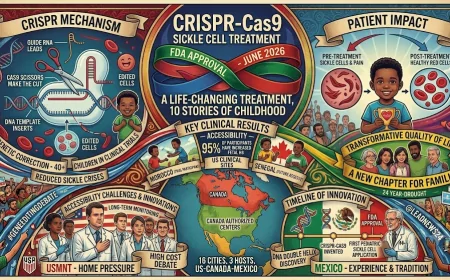
The FDA approved the CRISPR sickle cell treatment Casgevy for children aged 2-11 on June 2, extending the landmark 2023 therapy to younger patients.
- The FDA approved the CRISPR sickle cell treatment Casgevy for children aged 2-11 on June 2, extending the landmark 2023 therapy to younger patients.
- Category: vaccines
- Published: Jun 2, 2026
FDA Clears CRISPR Sickle Cell Treatment for Children in Historic Expansion
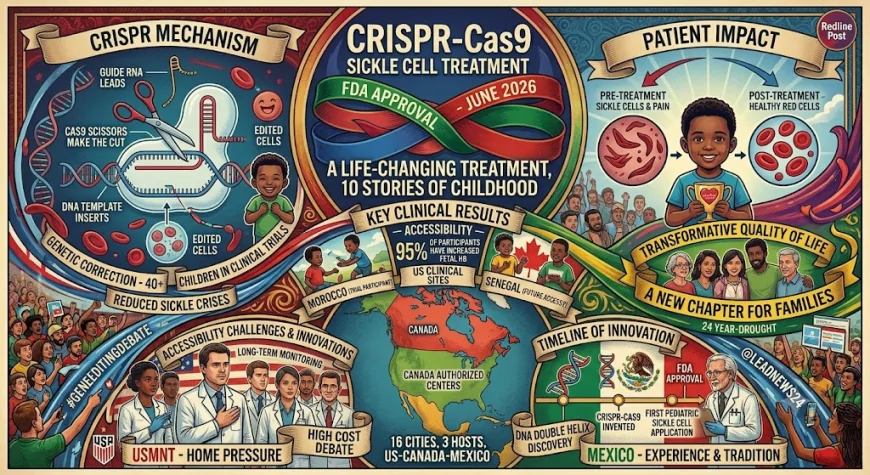
The US Food and Drug Administration approved on June 2 the first CRISPR-based gene editing treatment for sickle cell disease in children under 12 years old, expanding the landmark therapy Casgevy — originally approved for patients 12 and older in December 2023 — to the paediatric population where the disease causes the most severe developmental harm. The approval covers Vertex Pharmaceuticals and CRISPR Therapeutics' Casgevy for patients aged 2 through 11 who have severe sickle cell disease with recurrent vaso-occlusive crises.
Sickle cell disease is a hereditary blood disorder that causes red blood cells to deform into a crescent shape, blocking blood flow and causing severe pain crises, organ damage, stroke, and shortened life expectancy. It affects approximately 100,000 Americans, disproportionately those of African, Hispanic, and Middle Eastern descent. Children with severe sickle cell disease face the highest cumulative damage from the disease, as vaso-occlusive crises during critical developmental years can cause strokes, organ damage, and cognitive impairment that compound over time.
Casgevy works by editing patients' own stem cells to reactivate fetal haemoglobin production — a form of haemoglobin that does not sickle — effectively replacing the defective adult haemoglobin that causes the disease. Clinical trial data submitted to the FDA showed that 93% of treated patients were free from severe vaso-occlusive crises for at least 12 months following treatment. For children under 12, the trial showed comparable efficacy with an acceptable safety profile.
What the Paediatric Approval Means in Practice
The paediatric extension is significant beyond the immediate patient population it serves. Treating sickle cell disease earlier — before years of cumulative organ damage and pain crises — may substantially improve long-term outcomes compared to treating adolescents and adults who have already sustained years of disease burden. Haematologists who treat sickle cell disease have argued that a cure administered in early childhood represents a fundamentally different clinical proposition than the same cure administered at 20.
The treatment process remains intensive. Patients undergo stem cell harvesting, chemotherapy conditioning to clear existing bone marrow, and infusion of the gene-edited cells — a process requiring weeks of hospitalisation and months of recovery. For children, the tolerability of the conditioning chemotherapy regimen was a key safety question that the trial data needed to address before FDA could approve the younger age group.
According to Dr. Lewis Hsu, director of paediatric haematology at the University of Illinois Chicago and a leading researcher in sickle cell disease, "This approval is the culmination of decades of work by the sickle cell community. The disease has been systematically underfunded relative to its prevalence and severity. The CRISPR approval is a turning point, but it will only reach the children who need it if insurance coverage, treatment infrastructure, and equitable access are addressed with the same urgency as the science." Casgevy's 2023 FDA approval for adults and adolescents made it the world's first approved CRISPR-based medicine, a milestone in gene editing technology that opened a new era of precision genetic medicine.
Access and Cost Challenges
Casgevy's list price of $2.2 million per patient treatment has been the central challenge to its real-world impact since the 2023 adult approval. In the two and a half years since that approval, fewer than 200 patients in the United States have received the treatment — a fraction of the eligible population — due to insurance coverage denials, limited treatment centre infrastructure, and the complexity of the conditioning and recovery process.
For the paediatric population, these access barriers intersect with the additional complexity of treating younger children in a system where specialised CRISPR treatment centres are concentrated in major academic medical centres, primarily in urban areas. Children in rural or underserved communities with sickle cell disease face the highest disease burden and the most significant barriers to accessing the therapy that could relieve it.
Vertex Pharmaceuticals has announced a value-based payment arrangement pilot with several large insurers, under which full payment is spread over five years and linked to clinical outcomes. That model, if widely adopted, could make coverage decisions more manageable for insurers and reduce upfront barriers for health systems. Congressional attention to sickle cell treatment access has increased since the 2023 approval, with bipartisan legislation proposed to establish dedicated CRISPR treatment infrastructure grants.
Background and Context
Sickle cell disease was the first molecular disease ever characterised — its genetic basis was described in 1949 by Linus Pauling and colleagues. Despite that early scientific understanding, therapeutic advances lagged for decades as the disease received funding and research attention far below its clinical significance. The CRISPR revolution, which made precise gene editing clinically feasible, finally enabled the therapeutic breakthrough that researchers had theoretically understood was possible since the disease's molecular basis was first described.
According to the National Heart, Lung, and Blood Institute's 2025 sickle cell disease report, approximately 300,000 babies are born globally with sickle cell disease each year, with the highest burden in sub-Saharan Africa. The FDA's paediatric approval covers the US population; international access to CRISPR-based sickle cell treatments at any meaningful scale remains a distant prospect given the treatment's cost and infrastructure requirements — a global health equity challenge that the scientific breakthrough alone cannot resolve.
The paediatric approval represents both the extraordinary promise and the profound limitations of precision medicine in its current form: transformative for those who can access it, invisible in practice for the vast majority of those who need it most.
Frequently Asked Questions
What happened?
The FDA approved Casgevy, the CRISPR-based sickle cell treatment, for children aged 2-11 on June 2, 2026, expanding the landmark 2023 adult approval to younger patients where early treatment could prevent decades of cumulative disease damage.
Why does this matter?
Treating sickle cell disease before years of organ damage accumulate could dramatically improve long-term outcomes. The paediatric extension also tests whether the CRISPR treatment's access and cost barriers — which have limited adult uptake to fewer than 200 patients — can be overcome for a younger and often more vulnerable patient population.
Who is affected?
Approximately 100,000 Americans with sickle cell disease, disproportionately of African, Hispanic and Middle Eastern descent, are eligible. Children aged 2-11 with severe disease are newly covered. Insurers, treatment centres, and policymakers face immediate access and infrastructure challenges.
What happens next?
Treatment centres will need to develop paediatric-specific protocols for the conditioning and recovery process. Insurance coverage decisions will begin at major payers over the next 90 days. Vertex's value-based payment pilot results will influence whether the model expands nationally.