





























Ebola Outbreak in DRC and Uganda Declared Global Health Emergency
The WHO declared the Ebola outbreak in the Democratic Republic of Congo and Uganda a public health emergency of international concern on May 16, 2026, with over 1,200 cases reported.
- The WHO declared the Ebola outbreak in the Democratic Republic of Congo and Uganda a public health emergency of international concern on May 16, 2026, with over 1,200 cases reported.
- Category: vaccines
- Published: Jun 2, 2026
Ebola Outbreak in DRC and Uganda Declared Global Health Emergency
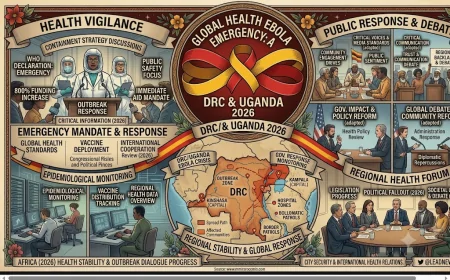
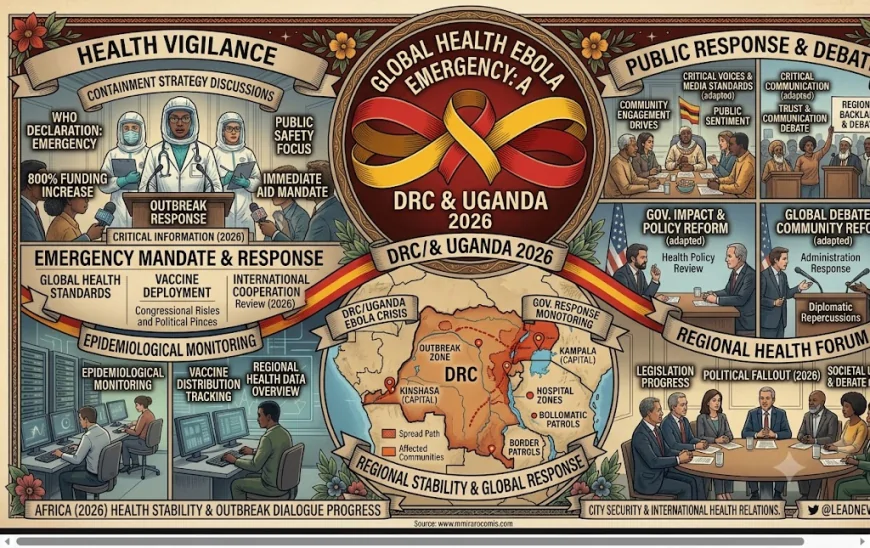
The World Health Organization declared the Ebola outbreak in the Democratic Republic of Congo and Uganda a public health emergency of international concern on May 16, 2026, as cases surged past 1,200 across multiple provinces. The outbreak, caused by the Bundibugyo ebolavirus, has killed at least 241 people and shows no signs of slowing. On June 2, 2026, the International Rescue Committee warned that the outbreak is "likely far worse" than official figures suggest, estimating that only 20% of contacts in the tracing process are being located. The situation is rapidly deteriorating.
The outbreak began in Ituri Province in northeastern DRC, where the first cases were detected in late April 2026. Unlike previous Ebola outbreaks caused by the Zaire ebolavirus, this epidemic is driven by the Bundibugyo strain, for which there is no licensed vaccine or specific treatment. Laboratory analysis confirmed the virus in eight samples on May 15, and the DRC Ministry of Health officially declared the outbreak the following day. The case fatality rate for Bundibugyo virus disease ranges from 25% to 50%, making it somewhat less lethal than the Zaire strain but still devastating.
The geographic spread has alarmed health officials. Cases have been confirmed in seven health zones in North Kivu, fifteen in Ituri, and one in South Kivu. Imported cases have reached Uganda's capital, Kampala, and Goma, a city controlled by the March 23 Movement rebel group. On May 27, Uganda closed its borders with the DRC for at least four weeks and imposed a mandatory 21-day quarantine on anyone entering from the DRC. Rwanda introduced mandatory quarantine for returning travelers on May 22. The cross-border nature of the outbreak complicates containment efforts enormously.
Vaccine Development and International Response
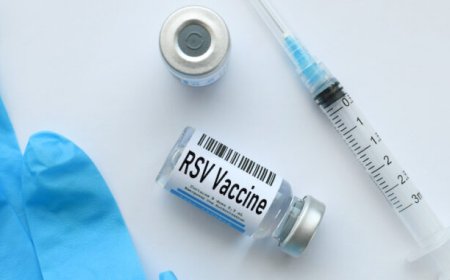
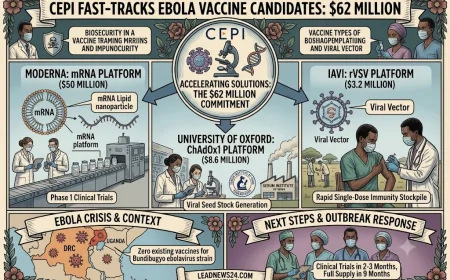
The lack of an approved vaccine for the Bundibugyo virus has hampered the response. On June 1, 2026, the Coalition for Epidemic Preparedness Innovations announced funding to fast-track three vaccine candidates. IAVI received $3.2 million, Moderna received $50 million, and the University of Oxford received $8.6 million for their respective candidates. The funding represents a significant acceleration of vaccine development, but clinical trials will take months at minimum. In the meantime, response teams are relying on supportive care, contact tracing, and infection prevention protocols.
The international response has been mixed. The United Kingdom announced up to £20 million in support on May 21. The European Union pledged €15 million on May 28. The United States, which left the WHO in 2025 under the Trump administration, announced $112 million in bilateral assistance on May 28, but critics say the US withdrawal from the WHO has severely hampered global coordination. Médecins Sans Frontières announced on June 1 that it is building a 65-bed Ebola treatment center in Ituri and supporting health facilities in Bunia. The charity has described the situation as "overwhelming."
Healthcare workers have borne a heavy toll. As of June 2, six healthcare workers have died, including two doctors. Several Red Cross volunteers who died in early May are now believed to have contracted Ebola during dead body management activities before the outbreak was identified. On May 23, eighteen suspected Ebola patients escaped a treatment center in Mongbwalu after local residents attacked and burned a tent. The incident highlights the deep distrust between communities and health authorities, a recurring challenge in Ebola response efforts.
Background & Context
This is the 17th Ebola outbreak in the DRC since the virus was first identified in 1976. The previous outbreak, caused by the Zaire ebolavirus, ended in December 2025, just five months before the current Bundibugyo outbreak began. The Ituri and North Kivu provinces have been plagued by decades of ethnic conflict, with the March 23 Movement and other armed groups controlling significant territory. According to the UN Office for the Coordination of Humanitarian Affairs, 1.9 million people in the region need humanitarian aid. The insecurity, combined with mining-related population movement and cross-border travel, creates ideal conditions for viral spread.
The Bundibugyo ebolavirus was first identified in Uganda in 2007 during an outbreak in the Bundibugyo District that killed 37 people. A second outbreak occurred in the DRC's Isiro region in 2012. The virus is less well-studied than the Zaire strain, and existing treatments such as monoclonal antibodies were developed specifically for Zaire ebolavirus. An animal study suggests that the Ervebo vaccine, approved for Zaire ebolavirus, may be partially effective against Bundibugyo, but there are significant concerns about safety and efficacy when using a vaccine designed for a different strain. According to the WHO, "Response strategies will rely heavily on comprehensive public health measures" until a specific vaccine is available.
Frequently Asked Questions
What happened?
The WHO declared the Ebola outbreak in DRC and Uganda a global health emergency on May 16, 2026, with over 1,200 cases and 241 deaths reported.
Why does this matter?
The outbreak is caused by a strain with no approved vaccine, is spreading across borders, and is occurring in a conflict zone that hampers containment.
Who is affected?
Communities in Ituri, North Kivu, and South Kivu provinces, Ugandan border populations, healthcare workers, and regional economies dependent on cross-border trade.
What happens next?
Vaccine candidates will enter accelerated trials, but containment depends on community trust-building and international funding for treatment centers.