
























NPR Journalist Sues Over AI Voice Clone: 'I Was Completely Freaked Out'
NPR journalist David Greene has filed a lawsuit after discovering an AI-generated clone of his distinctive voice was being used without his consent in commercial content, in a case that legal experts say could set a landmark precedent for voice rights in the AI era.
- NPR journalist David Greene has filed a lawsuit after discovering an AI-generated clone of his distinctive voice was being used without his consent in commercial content, in a case that legal experts say could set a landmark precedent for voice rights in the AI era.
- Category: Health
- Published: Feb 24, 2026
AI Stole His Voice — Now This NPR Journalist Is Suing to Get It Back
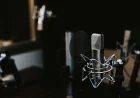
He heard himself on a podcast he had never recorded. Speaking words he had never said. In a voice that was unmistakably his.
David Greene, the veteran NPR journalist and former Morning Edition co-host, filed a lawsuit in federal court Monday after discovering that an AI-generated replica of his voice had been deployed in commercial audio content without his knowledge or consent. The content — a series of sponsored segments for a financial services company — had been distributed across multiple podcast platforms for at least three months before Greene became aware of it.
I was completely freaked out, Greene told his attorney in a declaration attached to the lawsuit. The voice was me. The cadence, the warmth, the specific way I handle a pause — whoever built this had studied me carefully.
The Legal Architecture of the Case
Greene's lawsuit names three defendants: the AI voice synthesis company that created the clone, the marketing agency that commissioned and deployed it, and the financial services firm that paid for the campaign. The complaint alleges violations of California's right of publicity statute, federal false endorsement claims under the Lanham Act, and common law misappropriation of likeness — a legal framework that courts have applied to visual images and is now being tested for the first time at scale against AI-generated audio.
The case raises a question that courts have not yet definitively answered: is a person's voice — not a recording of it, but the distinctive qualities and characteristics of it — intellectual property that can be owned and protected? For celebrities and public figures, the answer seems intuitive. But the legal framework is still being constructed in real time as AI voice synthesis technology has advanced far faster than the law.
According to Professor Jessica Silbey, a professor of law at Boston University who specializes in intellectual property and technology, this case has the potential to be a landmark. We have a well-known broadcaster whose voice is arguably his most professionally valuable asset. We have a company that replicated that asset without permission and profited from it. The facts are clean, and the legal questions are pressing. Courts have been waiting for exactly this kind of case.
A Flood of Similar Cases Is Coming
Greene's case is not isolated. Legal filings reviewed by this outlet indicate at least eleven other cases involving AI voice cloning are pending in federal courts in California, New York, and Tennessee. The defendants range from small AI startups to publicly traded technology platforms. The plaintiffs include musicians, voice actors, radio broadcasters, and at least one deceased celebrity whose estate is suing over posthumous voice synthesis.
The AI voice synthesis industry has grown explosively. Tools that could once only produce robotic approximations can now generate voices indistinguishable from the originals after training on as little as three minutes of audio. The audio used to train the clone of Greene's voice, according to the lawsuit, was almost certainly sourced from publicly available NPR broadcasts — recordings he made in the course of his professional work, never imagining they would become training data for a commercial impersonation.
Congress is considering federal right-of-publicity legislation that would extend voice protections nationwide, but no bill has reached the floor. Until legislators act, the courts will be making this law one lawsuit at a time.