



















OpenAI Signs Pentagon AI Deal After Trump Bans Anthropic From Federal Use
OpenAI signed an agreement with the US Defense Department to provide AI for classified networks, hours after President Trump ordered federal agencies to stop using Anthropic's AI systems.
- OpenAI signed an agreement with the US Defense Department to provide AI for classified networks, hours after President Trump ordered federal agencies to stop using Anthropic's AI systems.
- Category: Artificial Intelligence
- Published: Mar 1, 2026

OpenAI Lands Pentagon Deal as Trump Administration Bans Rival Anthropic
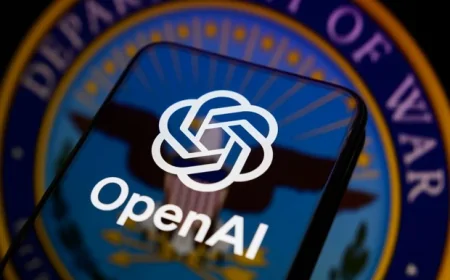
OpenAI secured a significant military contract Friday. The company announced it had signed an agreement with the US Department of Defense to provide artificial intelligence technology for classified networks — a deal that came just hours after President Donald Trump ordered federal agencies to immediately cease using AI systems built by Anthropic, OpenAI's primary rival in the enterprise AI market.
The White House did not publicly explain the reasoning behind the Anthropic ban beyond a brief executive order citing "national security considerations." Anthropic, which makes the Claude family of AI models and had previously signed contracts with several federal intelligence and defense agencies, said in a statement it was "reviewing the order and evaluating our legal options."
The sequence of events — Anthropic banned, OpenAI contracted to fill the gap within hours — raised immediate questions in Washington about whether the executive order reflected a genuine security determination or served commercial interests. Democratic lawmakers called for an investigation. Senator Ron Wyden of Oregon described the sequence as "a textbook case of using government power to pick corporate winners and losers."
OpenAI's Military Ambitions Accelerate
OpenAI's Pentagon deal marks a significant escalation of the company's push into national security markets. The company, which was founded with an explicit mission to ensure AI benefits humanity broadly and safely, has in recent years steadily expanded its government and defense footprint. Its deal with the Defense Department covers access to classified networks — a capability that requires far more stringent security clearances, data handling protocols, and operational safeguards than commercial deployments.
The specific terms of the OpenAI-Pentagon deal were not disclosed, but sources familiar with the matter told the New York Times that it covers language model access for intelligence analysis, logistics optimization, and cybersecurity applications across multiple classified environments.
According to Dr. Peter Singer, Strategist and Senior Fellow at New America and author of Ghost Fleet, "Every major AI company is now racing to establish itself as the primary AI vendor for the US military. The commercial AI market has become saturated. The defense market is the next trillion-dollar opportunity — and these companies understand that government relationships built now will define the competitive landscape for a decade."
Anthropic Ban Draws Scrutiny Across Washington
Anthropic has deep institutional roots in Washington. The company's Claude models were used by multiple intelligence agencies, several branches of the military, and numerous civilian departments for tasks ranging from document summarization to policy analysis. The sudden removal of those capabilities — effective immediately under the executive order — created operational disruptions that career officials described privately as "significant."
Several current and former federal employees told reporters they received no advance notice of the ban and scrambled Sunday to identify alternative tools or workarounds for time-sensitive tasks. The abruptness of the order added to the controversy.
Whether Anthropic mounts a successful legal challenge to the ban — and whether OpenAI's rapidly accelerating military role begins to attract the same kind of congressional scrutiny that large defense contractors traditionally face — will shape the increasingly blurred boundary between the commercial AI industry and the US national security apparatus.