

















































NASA Artemis IV Moon Mission Faces 18-Month Delay Due to SLS Issues
NASA announced an 18-month delay for the Artemis IV crewed Moon mission due to persistent technical challenges with the Space Launch System's upgraded core stage.
- NASA announced an 18-month delay for the Artemis IV crewed Moon mission due to persistent technical challenges with the Space Launch System's upgraded core stage.
- Category: Business
- Published: Feb 27, 2026
NASA Delays Artemis IV Moon Landing by 18 Months Over Rocket Issues
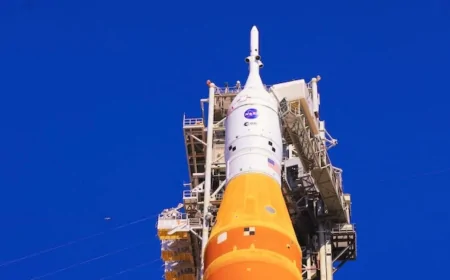
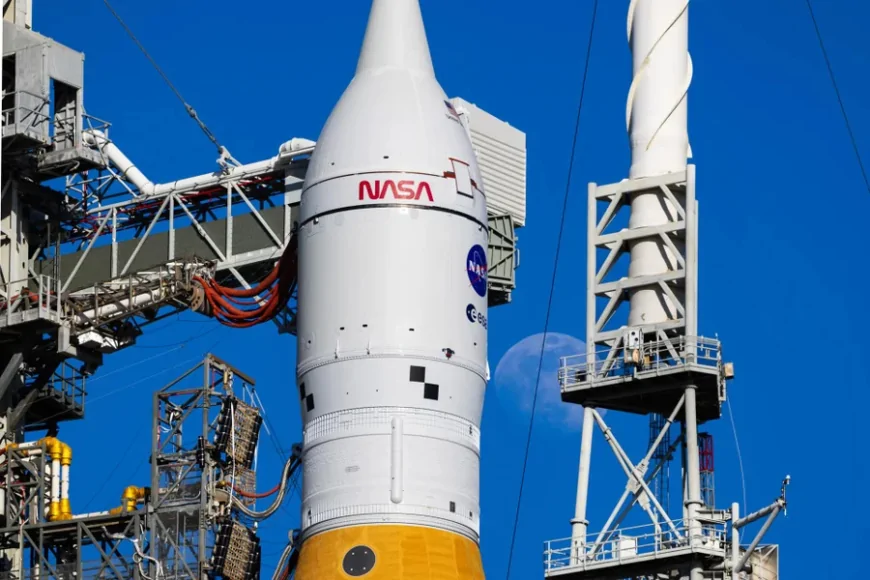
NASA announced on Thursday, February 26, 2026, that the Artemis IV crewed lunar surface mission will be delayed by at least 18 months, pushing the targeted launch window from late 2027 to mid-2029 at the earliest. Agency officials cited persistent technical challenges with the upgraded Block 1B configuration of the Space Launch System rocket, which Artemis IV requires to carry both the Orion spacecraft and the Gateway lunar space station modules to the Moon simultaneously.
The announcement came during a quarterly program review held at NASA's Johnson Space Center in Houston. Artemis IV was intended to be the first mission to deliver crew to the Gateway — a small space station in lunar orbit that NASA is building in partnership with ESA, JAXA, and the Canadian Space Agency — before landing astronauts on the surface for the first time since Apollo 17 in 1972.
NASA Administrator Bill Nelson acknowledged the delay in a statement, calling it "deeply disappointing" but necessary. "Safety is not negotiable," he said. "We will not fly until we are certain the vehicle and the crew are ready."
What Is Wrong With the SLS Block 1B
The Block 1B upgrade replaces the interim cryogenic propulsion stage used on Artemis I and II with a more powerful Exploration Upper Stage capable of sending significantly heavier payloads beyond low Earth orbit. During recent static fire tests at NASA's Stennis Space Center in Mississippi, engineers discovered cracking in welds connecting the upper stage fuel tanks — a structural issue that requires redesign of the affected sections rather than repair alone.
Aerojet Rocketdyne, the SLS main engine contractor, and Boeing, the core stage manufacturer, are both involved in the redesign effort. NASA sources said the welding issue was discovered late enough in the production schedule that delays to Artemis IV became unavoidable even in the most optimistic scenario.
According to Casey Dreier, Chief of Space Policy at the Planetary Society, "The SLS program has consistently faced development delays and cost overruns since its inception in 2011. The Artemis IV delay fits a pattern that raises legitimate questions about whether the SLS architecture remains the right vehicle for sustainable lunar exploration."
SpaceX and the Commercial Alternative
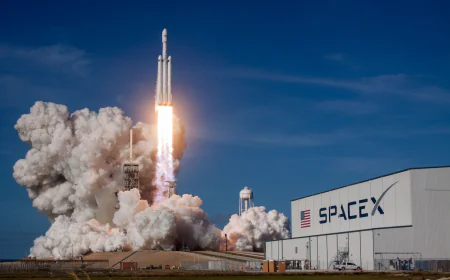
The delay renews pressure on NASA to expand its use of commercial alternatives. SpaceX's Starship, which serves as the Human Landing System for Artemis missions under a NASA contract, has now completed seven full integrated flight tests and successfully demonstrated propellant transfer in orbit — a capability central to the lunar architecture. SpaceX has suggested that Starship, paired with a commercial crew capsule, could reach the lunar surface independently of the SLS.
Congress will hold hearings in March to review the Artemis program's overall schedule, budget — which has exceeded $93 billion since 2012 — and strategic rationale in light of China's accelerating crewed lunar program. China successfully completed an uncrewed lunar sample return mission in 2025 and has publicly committed to landing a crewed mission before 2030.
Whether Artemis IV arrives at the Moon before or after Chinese astronauts do is no longer a settled question — and the answer carries geopolitical weight far beyond the technical details of welding schedules and rocket stages.