














































Newark Mayor Baraka Announces Legal Strategy to Shut Down ICE Jail
Newark Mayor Ras Baraka announced a legal strategy on June 2, 2026, to shut down the Delaney Hall ICE jail after protests and a hunger strike by detained immigrants.
- Newark Mayor Ras Baraka announced a legal strategy on June 2, 2026, to shut down the Delaney Hall ICE jail after protests and a hunger strike by detained immigrants.
- Category: U.S. News
- Published: Jun 2, 2026
Newark Mayor Baraka Announces Legal Strategy to Shut Down ICE Jail
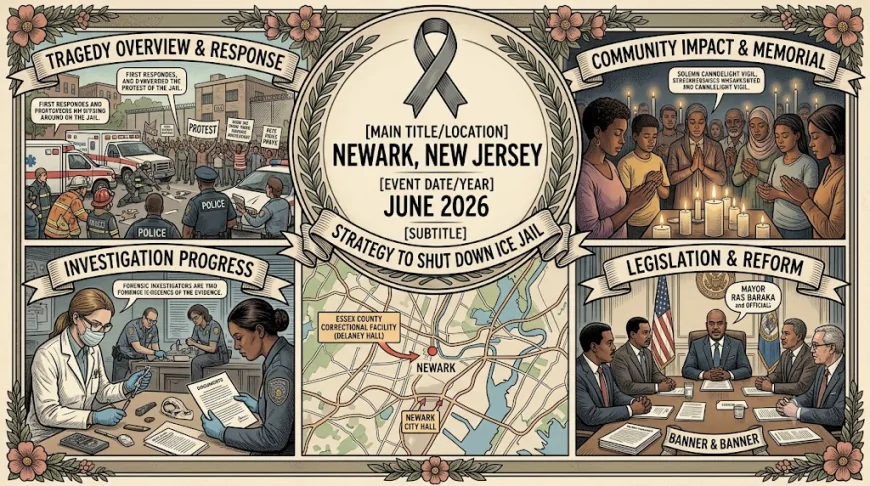
Newark Mayor Ras Baraka announced on June 2, 2026, that his administration would pursue a legal strategy aimed at shutting down the Delaney Hall ICE jail, a for-profit immigration detention center that has become the focal point of massive protests in New Jersey. The announcement came after immigrants inside the facility launched a hunger strike to protest inhumane conditions and medical neglect, while demonstrators outside faced violent clashes with federal agents and state police. Baraka's move represents one of the most aggressive municipal efforts to challenge federal immigration enforcement in recent years.
The Delaney Hall facility, operated by a private contractor, has been the site of escalating tensions for weeks. Detained immigrants have reported inadequate medical care, spoiled food, and arbitrary punishment by guards. On June 1, several dozen detainees began refusing meals, demanding their release and improved conditions. The hunger strike gained national attention after attorneys from the American Civil Liberties Union filed emergency motions seeking medical inspections of the facility. ICE has denied the allegations, stating that Delaney Hall meets all federal standards for detention.
Outside the facility, protests have grown increasingly confrontational. On the weekend of May 30-31, federal agents and New Jersey State Police used horses, clubs, pepper spray, and other so-called less lethal weapons to disperse demonstrators. Multiple protesters were hospitalized with injuries. Baraka condemned the police tactics as "overly aggressive, unnecessary, and in some instances unconstitutional." He announced that the Newark Police Department would exercise greater control over the perimeter of Delaney Hall, but maintained a 9 p.m. to 6 a.m. curfew in the surrounding area.
Legal Strategy and Political Implications
Baraka's legal strategy centers on zoning and environmental violations. The mayor's office has identified multiple alleged code violations at Delaney Hall, including inadequate fire safety systems and improper waste disposal. Newark's legal team is preparing to file suit in state court, arguing that the facility's operating permit should be revoked. The approach mirrors successful efforts by other cities to shut down private prisons through local regulatory mechanisms rather than direct challenges to federal immigration authority.
The political stakes are high. Baraka, a progressive Democrat, has made immigration justice a centerpiece of his administration. His confrontational stance with federal authorities has drawn praise from activists but criticism from Republicans who accuse him of undermining law enforcement. Governor Phil Murphy, also a Democrat, has offered tepid support for Baraka's efforts while cautioning against actions that could jeopardize federal funding for the state. The tension between municipal, state, and federal authorities has created a complex legal and political landscape.
The detainees themselves remain in limbo. Many have been held for months without formal charges, awaiting immigration hearings that have been delayed by a backlogged court system. The hunger strike has weakened several participants, and attorneys fear that ICE may force-feed detainees if the protest continues. According to Dr. Allen Keller, director of the Bellevue Program for Survivors of Torture, "Force-feeding is a form of cruel, inhuman, and degrading treatment. It should never be used to break a peaceful protest." The situation at Delaney Hall has become a flashpoint in the broader national debate over immigration detention.
Background & Context
The Delaney Hall facility opened in 2023 under a contract between ICE and a private prison company. It has a capacity of 1,000 beds and primarily houses immigrants awaiting deportation proceedings. According to a 2025 report from the Detention Watch Network, private immigration detention facilities have a higher rate of complaints about medical care and safety than government-operated facilities. The report found that for-profit operators cut costs by reducing staffing levels and skimping on healthcare, leading to preventable deaths and injuries.
Newark has a long history of progressive immigration policies. In 2018, the city declared itself a sanctuary city, limiting cooperation between local police and federal immigration authorities. Baraka has expanded those protections, creating a municipal identification program that allows undocumented immigrants to access city services. The legal challenge to Delaney Hall represents the next phase of Newark's resistance to federal immigration enforcement. According to a 2025 analysis from the Migration Policy Institute, at least 12 other cities have used zoning laws to challenge immigration detention facilities, with mixed results.
Frequently Asked Questions
What happened?
Newark Mayor Ras Baraka announced a legal strategy on June 2, 2026, to shut down the Delaney Hall ICE jail after protests and a detainee hunger strike.
Why does this matter?
The case tests whether municipalities can use local zoning laws to challenge federal immigration detention and could set precedent for other cities.
Who is affected?
Detained immigrants at Delaney Hall, Newark residents, federal immigration enforcement operations, and private prison contractors nationwide.
What happens next?
Newark will file suit in state court seeking to revoke the facility's operating permit, while ICE may attempt to transfer detainees to other facilities.