






































Trump Abandons $1.8 Billion Fund for MAGA Supporters After GOP Revolt
President Trump has shelved his $1.8 billion fund to compensate January 6 participants after fierce Republican opposition in Congress and a federal court order.
- President Trump has shelved his $1.8 billion fund to compensate January 6 participants after fierce Republican opposition in Congress and a federal court order.
- Category: U.S. News
- Published: Jun 2, 2026
Trump Abandons $1.8 Billion Fund for MAGA Supporters After GOP Revolt
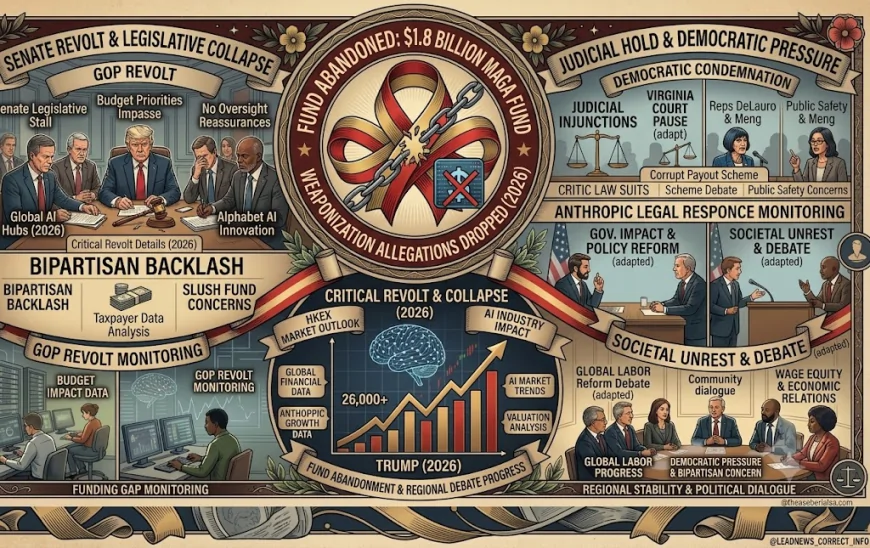
President Donald Trump has shelved his controversial $1.8 billion fund to compensate supporters who participated in the January 6, 2021, Capitol insurrection, following fierce opposition from Republicans in Congress and a federal court order. Three sources familiar with the plan confirmed on June 2, 2026, that the White House has put the program on hold indefinitely. The fund was established as part of a settlement following Trump's $10 billion lawsuit against the IRS over the leak of his tax returns.
The proposed fund, which critics called a "slush fund" for MAGA loyalists, would have distributed payments to individuals convicted or charged in connection with the January 6 attack. The plan faced immediate backlash from Republican lawmakers who feared it would become a political liability in the upcoming midterm elections. Several GOP senators privately warned the White House that the fund would alienate moderate voters and energize Democratic opposition. The Justice Department also announced it would pause the program to comply with a court order.
Federal Judge Kathleen Williams reopened the case last week after a bipartisan group of 35 former federal judges urged her to scrutinize the settlement more closely. The judges raised concerns that the $1.8 billion fund represented an improper use of settlement money for political purposes. Trump's legal team had argued that the fund was necessary to compensate victims of government "weaponization," but the judges found this rationale unpersuasive. The court order forced the administration to halt disbursements pending further review.
Political Fallout and Republican Divisions
The abandonment of the fund exposes deepening divisions within the Republican Party. Trump's base remains fiercely loyal to the former president, and many January 6 participants have become cause celebres in MAGA circles. However, the party's establishment wing has grown increasingly wary of Trump's grip on the agenda. According to Republican strategist Sarah Longwell, "This fund was a bridge too far for many Republicans. They don't want to be defending payments to insurrectionists in swing districts."
The decision also highlights the limits of Trump's influence over Congress. Despite controlling both the House and Senate, Trump has faced resistance on several controversial initiatives. The fund's collapse marks a rare instance where Republican lawmakers successfully pushed back against the White House. Senator Mitt Romney, who has been a vocal critic of Trump, called the fund "an affront to the rule of law" in a statement on June 2. Other Republicans have been more circumspect, avoiding direct criticism while signaling relief that the issue is off the table.
For the January 6 participants and their families, the news is a bitter disappointment. Many had been counting on the fund to cover legal fees and lost wages. Some had already begun spending anticipated payouts. The halt in disbursements leaves them in legal and financial limbo. Several participants have indicated they may sue the administration for breach of an implied promise. Legal experts say such lawsuits would face significant hurdles, as no formal contracts were ever signed.
Background & Context
The $1.8 billion fund originated from Trump's lawsuit against the IRS, which he filed after his tax returns were leaked to the media. The lawsuit sought $10 billion in damages, alleging that the leak was politically motivated and violated his privacy rights. The IRS settled for $1.8 billion, with the understanding that the money would be used to compensate victims of alleged government persecution. Critics immediately noted that the settlement amount was unusually large and that the fund's structure appeared designed to benefit Trump's political allies.
The January 6 insurrection resulted in the deaths of five people and injuries to approximately 140 law enforcement officers. More than 1,500 individuals have been charged in connection with the attack, with hundreds receiving prison sentences. According to a 2025 report from the Brennan Center for Justice, the total cost of prosecuting and incarcerating January 6 defendants has exceeded $500 million. The proposed fund would have effectively reversed some of those penalties by providing financial compensation to the perpetrators.
Frequently Asked Questions
What happened?
President Trump abandoned his $1.8 billion fund for January 6 participants on June 2, 2026, after Republican opposition and a federal court order.
Why does this matter?
The collapse exposes Republican Party divisions and marks a rare congressional pushback against Trump's agenda ahead of the midterm elections.
Who is affected?
January 6 defendants and their families lose expected compensation, while Republican lawmakers in swing districts avoid a political liability.
What happens next?
Federal Judge Kathleen Williams will review the settlement, and Trump may attempt to restructure the fund through executive action.