













































Ethiopia Votes in General Election as Abiy Seeks Third Term
Ethiopia held its 2026 general election June 1 with PM Abiy Ahmed's party projected to dominate, while Tigray was excluded amid instability.
- Ethiopia held its 2026 general election June 1 with PM Abiy Ahmed's party projected to dominate, while Tigray was excluded amid instability.
- Category: World News
- Published: Jun 2, 2026
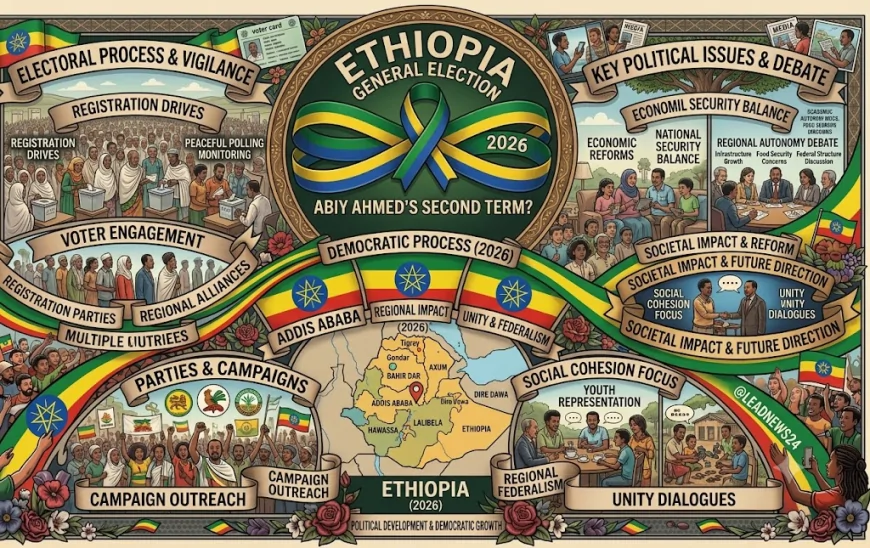
Ethiopia Goes to the Polls as Abiy Ahmed Seeks to Consolidate Power
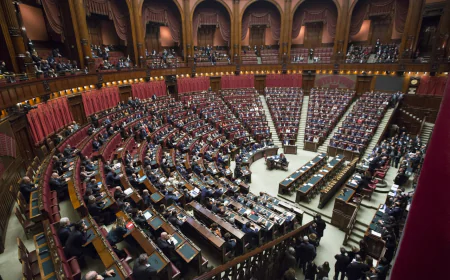
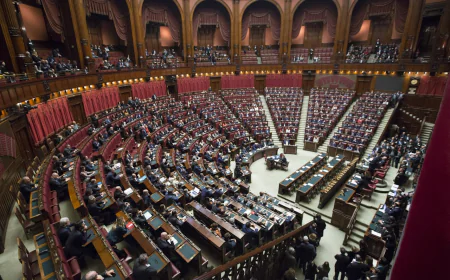
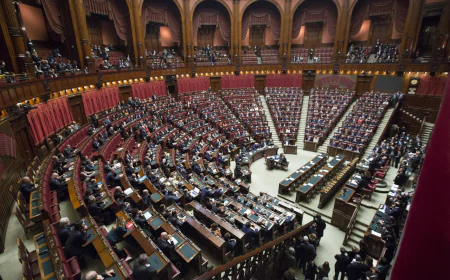
More than 50 million registered Ethiopian voters went to the polls on June 1 in the country's 2026 general election, the most consequential vote since Prime Minister Abiy Ahmed's Prosperity Party won a landslide majority in 2021. Ballot counting is underway at polling stations across the country, and official results are expected by June 11, according to the National Election Board of Ethiopia.
Abiy Ahmed, who won the Nobel Peace Prize in 2019 for ending the long war with Eritrea, enters this election with a complicated legacy. His administration has presided over a devastating civil war in Tigray from 2020 to 2022, ongoing armed insurgencies in the Oromia and Amhara regions, and a significant democratic backslide characterised by the arrest of opposition leaders and restrictions on political activity. His Prosperity Party government has also delivered some of the fastest economic growth on the continent, with Ethiopia projecting GDP growth above 10% in 2026.
In a significant development, polling did not take place in the northern Tigray region, where the National Election Board cited unfavourable security conditions following the civil war and continuing political turmoil. The exclusion of Tigray — home to millions of voters — has drawn criticism from international observers who question the election's representativeness.
The Opposition's Constrained Landscape
Opposition parties entered the election in a weakened position. Several prominent opposition leaders have been arrested or face legal obstacles to their political activities in the months preceding the vote — charges the government denies are politically motivated. The Prosperity Party has strategically refrained from fielding candidates in more than two dozen constituencies, a move analysts describe as calculated to create the appearance of parliamentary diversity while retaining dominant control of the legislature.
According to Prof. Merera Gudina, veteran opposition politician and former chairman of the Oromo Federalist Congress, "This election is happening under conditions that make genuine competition impossible in large parts of the country. The government has made tactical concessions on form while maintaining full control of substance." International observers from the African Union and European Union have deployed monitoring missions but their preliminary findings will not be released until after vote counting concludes.
The Fano insurgency in Amhara and the Oromo Liberation Army conflict in Oromia have disrupted normal political life in multiple constituencies. Voters in conflict-affected areas face genuine security risks in exercising the franchise. Ethiopia's 2020-2022 Tigray civil war killed an estimated 300,000 to 500,000 people and left the region's political and institutional fabric deeply damaged, making its exclusion from the 2026 election a direct legacy of that conflict.
Economic Record and Demographic Stakes
Abiy's campaign has centred on Ethiopia's economic performance. The country has sustained some of Africa's fastest growth rates, driven by infrastructure investment, industrial park development, and agricultural modernisation. Foreign direct investment has recovered from the Tigray war lows. The government has emphasised improved food security metrics and expanded electrification across rural areas.
The demographic stakes of this election are enormous. Nearly half of Ethiopia's 135 million people are under 18, giving the country one of the world's youngest populations. The Prosperity Party's ability to generate employment for the rapidly expanding youth cohort will be the defining test of any government formed from this election's results. Youth unemployment and land access remain the primary drivers of the armed insurgencies that continue to challenge the state's authority in multiple regions.
Ethiopia is Africa's second most populous country and one of the continent's most strategically significant states, bordering Sudan, South Sudan, Kenya, Somalia, Djibouti, and Eritrea. Its political stability — or instability — has direct consequences for the entire Horn of Africa region and for international humanitarian operations serving millions of people across the sub-region.
Background and Context
Ethiopia held its previous general election in June 2021, in which Abiy's Prosperity Party won 410 of 484 parliamentary seats. International observers described that election as significantly flawed, citing restrictions on opposition participation, media access limitations, and the exclusion of Tigray. The 2026 election takes place in a more contested environment, with the Tigray peace deal holding but regional insurgencies continuing to create security challenges that suppress voter participation in affected areas.
According to Human Rights Watch's 2025 Ethiopia report, the government has arrested prominent opposition figures, journalists, and civil society leaders in the period leading up to the election. The report documented systematic obstruction of opposition campaigning in multiple regions. The African Union's election observation mission has deployed 80 observers across the country — a relatively small number given Ethiopia's geographic scale and the security challenges in contested regions.
Results expected June 11 will determine the composition of the House of Peoples' Representatives, which will in turn select the Prime Minister and form the federal government. Whether Abiy achieves a result that carries domestic and international legitimacy — or merely a numerical majority — will shape Ethiopia's relationship with international donors and partners for the next five years.
Frequently Asked Questions
What happened?
Ethiopia held its 2026 general election on June 1 with over 50 million registered voters. PM Abiy Ahmed's Prosperity Party is projected to dominate. Tigray was excluded from voting. Official results are expected by June 11.
Why does this matter?
Ethiopia is Africa's second most populous nation. The election's outcome shapes the country's political direction, its ongoing insurgencies, its relationship with international donors, and stability across the entire Horn of Africa region.
Who is affected?
135 million Ethiopians, neighbouring countries across the Horn of Africa, international humanitarian organisations operating in the region, and foreign investors in Ethiopia's growing economy all have significant stakes in this election's outcome and legitimacy.
What happens next?
Vote counting continues with results due June 11. International observer preliminary statements will be released within days. The new parliament will convene to select a Prime Minister and form a government within weeks of final results being certified.